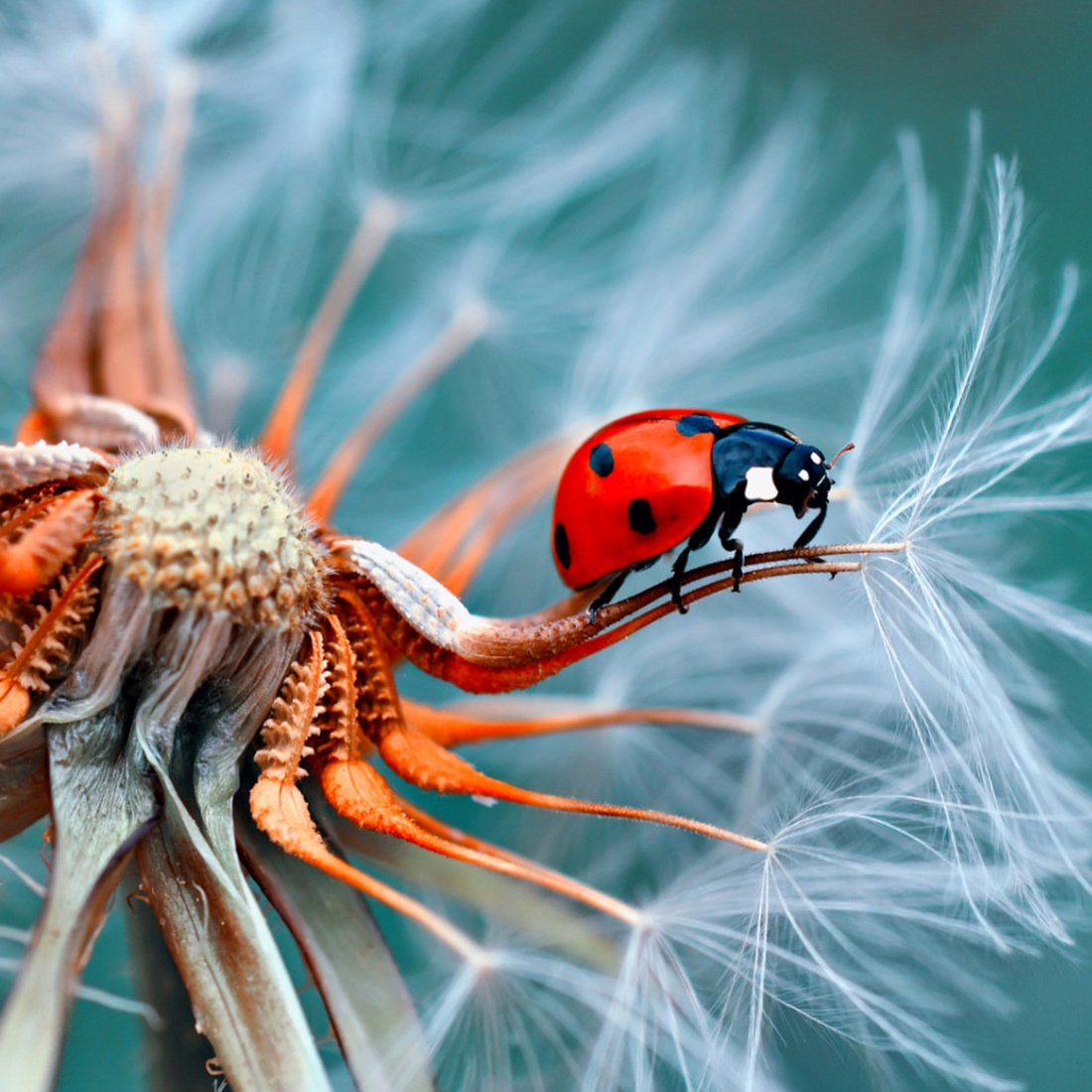
 Macro photography uses prime lenses, ideally to create a magnification of 1:1 so the object photographed appears as the same size on the camera sensor.
Macro lenses of different focal lengths allow for a greater distance between the subject and the front of the lens.
Magnification filters can be bought at a lower cost than a macro lens which fit on the front of a standard lens but increase magnification by 2x 4x 6x 10x etc. A magnification lens will also soften the fee of the object. The thicker the magnification lens is (thickness of the glass not the magnification) will reduce distortion of the shot.
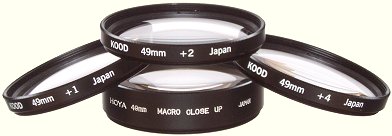
Step up rings can be used to ensure that the filters can attach to any of the lenses in your possession.
Extension tubes 12mm, 20mm and 35mm will create a magnified effect and will work with the data on the camera eg autofocus ABS.
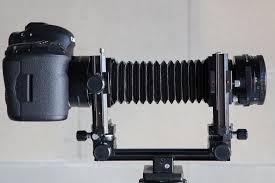
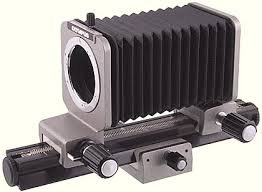
Bellows extension can be used, using the retro format of a bellows, this will also extend the magnification.
Both extension tubes and bellows will loose a couple of f stops on the camera due the loss of light. The digital display on the camera may change the aperture number on the camera, as it fools the camera into believing it is using a higher f stop eg the actual set up may be f8 but the camera may read f16 if using a bellows as there is less light reaching the sensor.
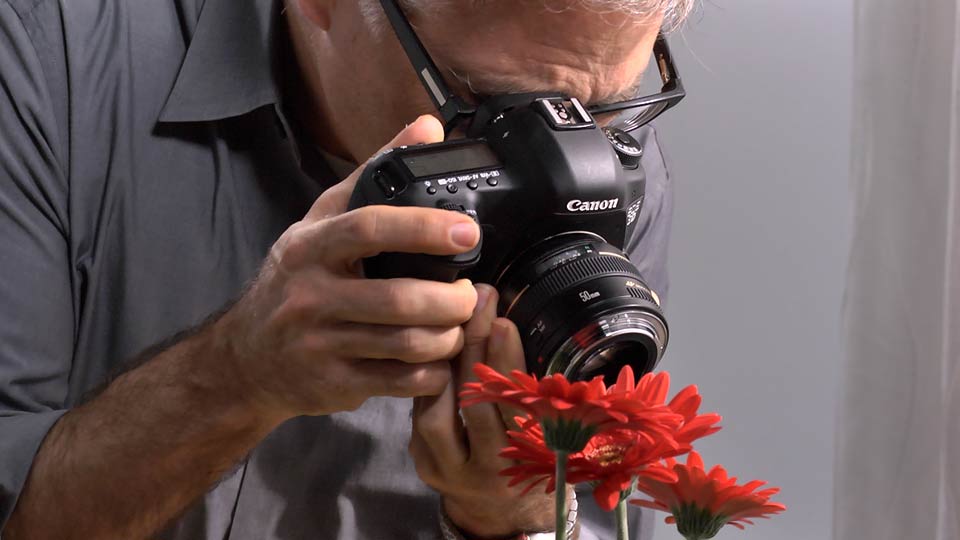
Reversing rings, with aperture control allow standard lenses to be reversed which will then magnify in the same way.
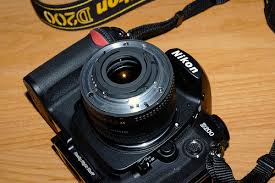
Focusing rails and sliders can be used for stability, in conjunction with a tripod. These allow for precision and fine focussing. Levon Bliss using these to ensure his 5000 photos of insects can focus adjusted and then stacked together to create his detailed/anatomic photos.
Lighting For Macro Photography
Simply using flash on camera is not adequate for macro photography the results would not be good enough.
Off camera flash will soften the light, but it is recommended that the flash is covered by soft paper or cloth to soften.
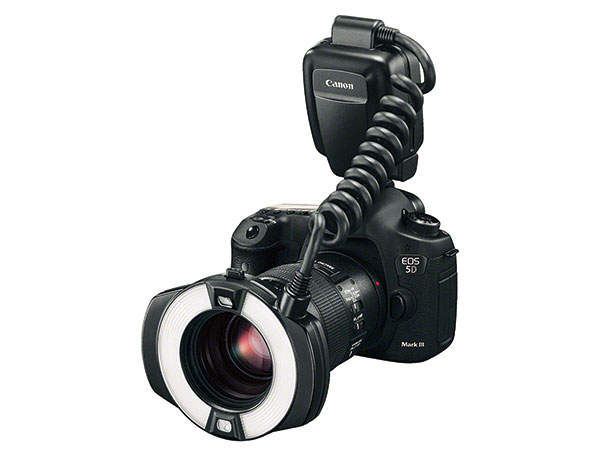
A Macro flash can be fitted to the front of the macro lens and the strength can be adjusted as necessary. More light a ring flash on the lens.
Set Up For Macro Photography
Ideally use a specific backdrop, black card is ideal.
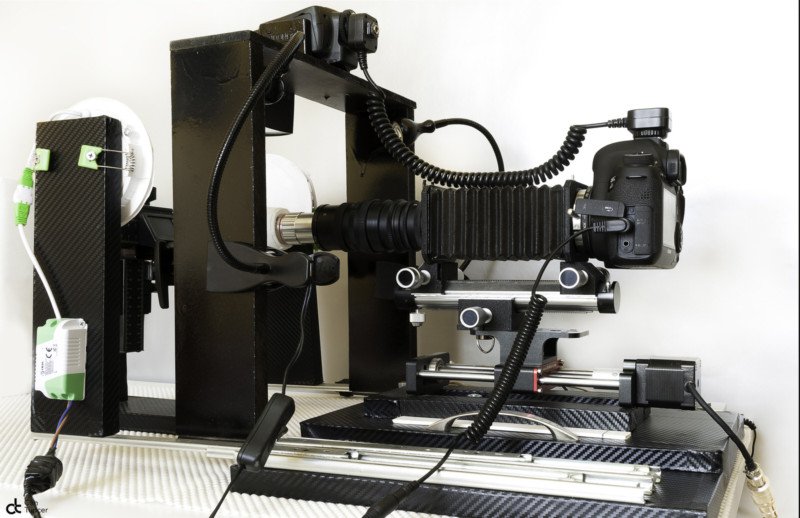
The depth of field will be very narrow – millimetres. f11 or f16 are best options for depth of field. The ideal setting can be calculated using a depth of field calculator.
Light meters are also useful. If you are using a higher f stop eg f16, you would need multiple flashes to get enough light and enough detail. Once again using the high aperture numbers get the best detail. The light meter will calculate the best number of multiple flashes.
Focus Stacking
Focus stacking of photos where the focus has been shifted, can be blended in post production Photoshop or Lightroom, to create detailed images.
Bracketing, where the camera takes 3 different photos with different exposures (under, normal, over) can also be useful to ensure adequate detail is obtained.
(Press BKT on the front of the camera and turn the wheel to set the number of images that will be taken).
If, like Levon Bliss, you perfect the art of macro photography, the images you create could be these:


 The Bigger Picture